The Daylight Factor
The daylight factor is the CIE recommended method for assessing the performance of a rooflight daylighting system. It is useful for estimating the amount of glazing needed to provide daylight to a space.
The daylight factor uses a ratio between indoor and outdoor lighting levels which, in turn, are dependent on the rooflight design and location. The daylight factor does not have a specific value of illuminance. It is defined as ‘the ratio of interior illuminance on a horizontal surface to the exterior illuminance on a horizontal surface from the CIE Overcast Sky'.
The greater the amount of light entering through a rooflight, relative to the outside illuminance, the higher the daylight factor will be. The illuminance in a daylit interior will vary, depending on the sky luminance, but the daylight factor remains the same.
The daylight factor is affected by aspects such as maintenance and cleanliness of the rooflight, internal decorative finishes and surface distance from the opening.
Practical Examples of Daylight Factors |
||
 |
 |
 |
Daylight Factor
|
Daylight Factor
|
Daylight Factor
|
Calculating Daylight
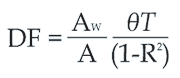
During the early periods of rooflight design and specification it may be necessary to ascertain the area of glazing required to give a set daylight factor. Predicting daylight can be estimated using the daylight factor equation. This uses the following formula to calculate the daylight factor at a single point in the centre of the room:
|
|
Where:
|
DF is the daylight factor (%). |
| Aw is the glazed area of the windows (m²). | |
| A is the total area of all the surfaces in the room (including windows). | |
| T is the transmittance of the glazing to diffuse light; it includes the maintenance factor (to account for dirt on the glass. | |
| Ø Is the angle of visible sky, measured in section from a point in the centre of the window (degrees). | |
| R is the area-weighted mean reflectance of the room surface. | |
Additional practical information can be found in CIBSE’s Lighting Guide LG10: 1999—‘Daylighting and window design.’