Natural Lighting Benefits for Buildings of all Types
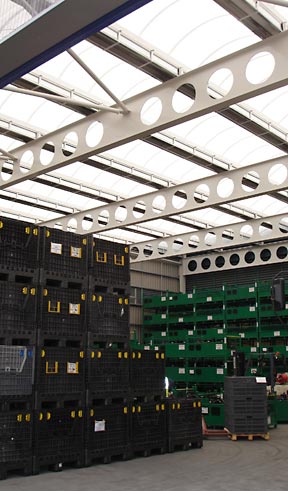
Rooflights can form part of an effective technical lighting scheme, particularly in conjunction with efficiently controlled artificial lighting, to produce specified illumination levels for particular tasks. According to leading consultants, horizontal rooflights provide two and a half times more light than vertical windows. This approach can save energy and reduce the carbon footprint of any building type.
In addition, rooflights can also add to the more subjective qualities of spaces as an integral part of the building’s architecture. They can provide views of the sky and promote a sense of well-being and connection with the outside without the distractions encountered with views through vertical glass windows. Introducing daylight into a building has been proven to be crucial for the well-being, safety and efficiency of the people using the building. Workplace (Health, Safety and Welfare) Regulations 1992 state that: ‘Every workplace shall have suitable and sufficient lighting which shall, so far as is reasonably practicable, be by natural light’. This is restated in the HSG38 ‘Lighting at Work’ booklet.
For schools, specific guidance on natural lighting and rooflights is available, in Building Bulletin 90—‘Lighting Design for Schools’. This provides essential guidance for both primary and secondary schools, whether for new or refurbishment projects, and helpful background for other similar building types. It stresses that natural lighting during daylight hours should always be the major source, supplemented by electric light when needed. Designers should assume that daylighting will be the prime means of lighting in all areas unless there are specific, over-riding reasons for artificial lighting in certain rooms. BB90 contains a comprehensive section covering lighting design, including rooflights. As it points out, rooflights let in light from the brightest part of the sky and are not generally affected by external obstructions, such as trees or other buildings. They also provide a more even pattern of light than vertical windows.
Rooflights are favoured in areas where vertical windows with views are not possible, so that ‘daylight contact’ is maintained. Guidance is included on avoiding discomfort glare, which can occur if the rooflight glazing can be seen directly from normal viewing positions at less than 35° above the horizontal. Rooflights with ‘coffers’ or kerbs help to avoid this, particularly with high reflectance sides to ‘soften’ light distribution. When recommended daylight levels cannot be achieved throughout a space, supplemental electric lighting can be introduced with suitable control systems, which probably need to be separate from night-time electric lighting controls.
Rooflights may be particularly helpful in specific applications as cited in BB90. For example, where Display Screen Equipment (DSE) is used, vertical windows can be problematic for users and roof lighting offers an alternative, higher level light source. Various examples of room lighting designs are also included, exploring alternatives such as adding rooflights above the furthest wall from a window to even-out natural lighting and use of central rooflights to give consistent light distribution. Rooflights are also regarded as important for—often internal—communal spaces such as atria and circulation ‘streets’.